The Cover Bet That Kills the Bonus: Reading 'Irregular Betting' Clauses at UK Casinos
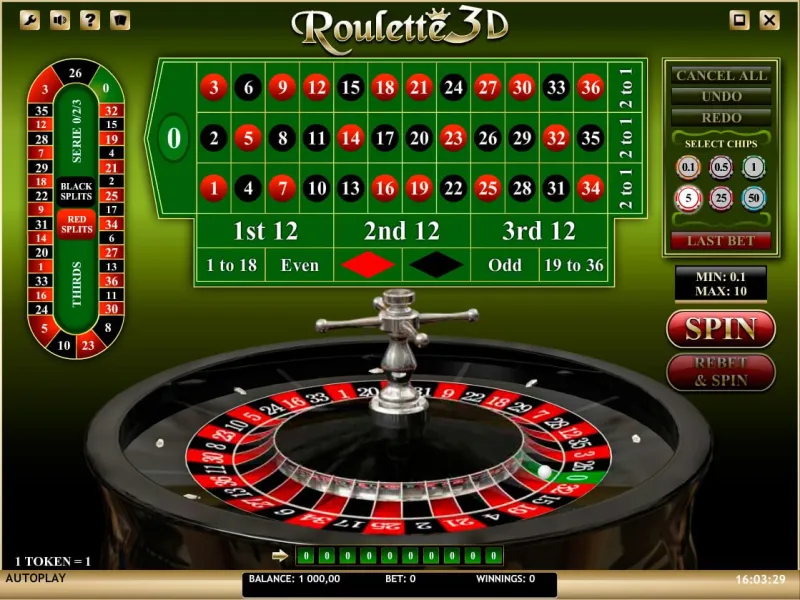
Photo: roulette table close up red and black numbers, casino chips, moody lighting, via www.netbet.org
Picture the scene. You've cleared £1,200 of wagering in a weekend, the bonus is done, and you've requested a withdrawal of £340. Two days later an email arrives: your bonus and associated winnings have been voided under clause 7.4, irregular betting.
No warning. No flag at the time. Just a ruling after the final whistle.
This is one of the most common ways a UK welcome bonus dies, and almost always because of a clause nobody read properly. Let's break down what 'irregular' actually means in practice.
Why the clause exists at all
A welcome bonus is a marketing cost. The operator is buying a chance to keep you as a customer. What it isn't buying is a guaranteed payout to someone who has found a way to clear wagering with the risk stripped out — because that turns a promotional budget into an ATM.
So the terms blanket-ban anything that looks like risk reduction rather than gambling. The problem is that the wording is usually broad, vague, and enforced retroactively. You won't get a red card on the pitch. You'll get it in the tunnel, three days later.
The triggers you'll actually see
1. Covering both sides of the same market
Bet on Team A to win and Team A not to win — or, more commonly, back the home side and lay or back the draw and away in separate wagers totalling the same stake — and the pattern reads as zero-risk. It doesn't matter that you didn't win both. It matters that you couldn't lose.
Casino-side equivalents are just as common: red and black, odd and even, high and low, or covering 30-odd numbers on roulette so that almost every spin returns roughly your stake. Some terms call this 'hedging', some call it 'low-risk betting', some just say 'irregular'. Same result.
2. Odds that are too short to mean anything
Many UK bonuses require qualifying bets at minimum odds — commonly 1.50, sometimes 1.80 or 2.00 — and require that all wagering bets meet it, not just the first. A 1.02 football bet is effectively a coin-flip on whether the site honours the bonus.
Watch the small print on how the threshold is expressed. Decimal odds, fractional odds and 'odds of 1/2 or greater' are not the same instruction, and some terms apply the minimum per selection while others apply it per bet slip. If you're building accumulators, check whether every leg has to qualify or just the total.
3. Matched-betting fingerprints
Matched betting isn't illegal in the UK, but it is explicitly against the bonus terms of essentially every UK-licensed casino and sportsbook. The fingerprints are distinctive: identical stakes on opposing outcomes, accounts funded and withdrawn in tight cycles, bets placed within seconds of each other at prices that move in sync, and a bonus that gets cleared with almost no variance.
If you're running a matched-betting routine, keep it well away from a bonus-eligible account. Mixing the two is how people lose both the bonus and, in some cases, the account.
4. Stake-shaping and 'gaming the weighting'
Betting the minimum on high-weight games and the maximum on low-weight ones, or switching games purely to exploit a weighting table, can fall under the same umbrella. So can a pattern of bets so small that the wagering contribution rounds to nothing but the volume looks like automation.
The bit that catches people out: retroactive enforcement
Almost every set of terms includes a version of: we reserve the right to withhold or void a bonus and any winnings where we reasonably suspect irregular play. The word 'suspect' is doing a lot of work. It means the operator doesn't have to prove you intended to exploit anything; a pattern can be enough.
Practically, this means the review happens at withdrawal, because that's the first point where the operator has anything to lose. Which is why the email always arrives after you've cleared wagering rather than before.
Keeping your wagering onside: a short checklist
- Read the bonus terms before you opt in, and specifically search the document for 'irregular', 'low risk', 'hedge', 'arbitrage' and 'minimum odds'.
- One outcome per market, per event. Not two, not a cover, not a saver.
- Clear the minimum odds on every qualifying bet, not on average.
- Don't run cover bets across two accounts at the same operator. Household-level linking is a thing, and we've written before about how quickly that gets flagged.
- Keep your bet history clean and boring. Straight singles, sensible stakes, ordinary markets.
- Screenshot your bet slips as you go, particularly the odds and the timestamp. If a dispute lands, this is your evidence.
- Never use a betting-syndicate template on an account holding a welcome bonus. 'Community' strategies spread through forums are precisely what the clause was written to catch.
If you get flagged anyway
Don't fire off an angry message — fire off a factual one. Ask which specific term was breached, ask for the evidence, and ask for the decision in writing. Then take it up the chain: internal complaint, then the operator's nominated alternative dispute resolution service, which is the route UK players have when a bonus ruling feels wrong.
And keep it in perspective. If a voided bonus has you looking for another site to win it back on, that's the signal to stop for the day rather than reload. Set deposit limits while you're calm, use GamStop if you need a proper break, and remember GamCare and GambleAware are free and confidential. BeGambleAware.org. 18+.
The clause isn't there to catch unlucky players. It's there to catch patterns. Play like a punter, not like a system, and you'll rarely meet it.